
Coin Flip Master
PlayWillArcade
2.333.00 Reviews
- Version
- 4.0.0
- Installs
- 50.00K
- Age Rating
- Everyone
Screenshots
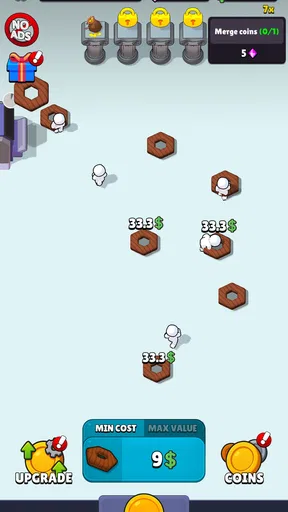
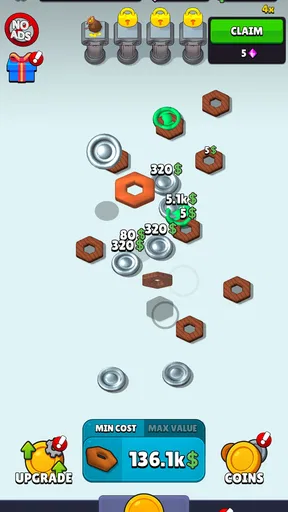
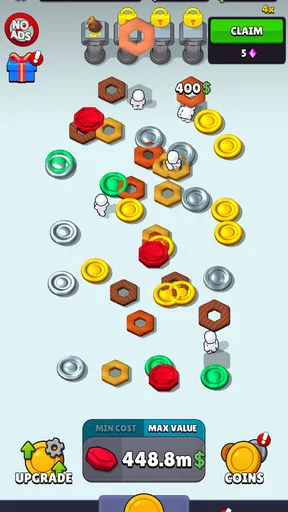
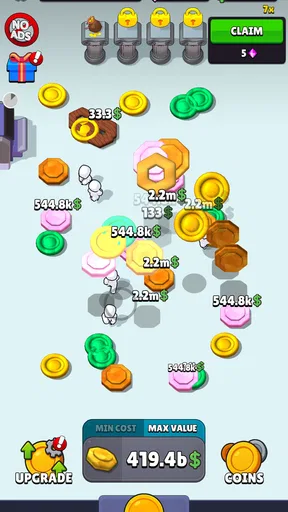
Our Review of Coin Flip Master
 Analysis by Appyee
I tried Coin Flip Master as a quick arcade game and found that its appeal is easy to understand: it turns the simple act of flipping a coin into a light progression loop built around the fantasy of becoming extremely wealthy. That idea is deliberately straightforward, so the game is best approached as a short-session distraction rather than a deep strategy experience.
It is free to download, made by PlayWill, and aimed at Everyone. The game is listed in the arcade category, supports devices running Android 9 or later, and currently appears as version 4.0.0. Its store presence has reached over 50 thousand installs, although the average score is only 2.3 from around 142 ratings, with roughly 33 written reviews. That combination tells me to keep expectations measured: there is enough interest to make it worth trying, but the reception is clearly mixed.
How Coin Flip Master Fits Into Everyday Play
When I fit Coin Flip Master into an ordinary day, I think of it as a small pause rather than a game that needs a planned session. Its simple premise makes it easy to pick up while waiting, but I’d judge it by whether each round gives me a satisfying reason to continue. That comes down to the rhythm of action, feedback, and progress—and whether the next turn feels inviting or merely automatic.
A shared-device game for spare moments
The most natural use case is a shared phone or tablet sitting on a kitchen counter, coffee table, or charging shelf. Someone has a few minutes before dinner, another person is waiting for a ride, or a child wants to try something that does not require a long tutorial. The coin-flipping premise makes it easy for a new player to understand what is happening without having to learn a complicated control scheme.
I can see this working particularly well when several people take turns on the same device. One person can make a few flips, hand the phone over, and let the next player continue. That kind of informal play is different from a competitive multiplayer game: the app does not need to become a family activity to be useful. It can simply provide a common, low-pressure diversion.
Still, I would not confuse easy access with lasting depth. The billionaire theme gives the game a clear direction, but the core action remains intentionally narrow. If you usually play arcade titles for reflex challenges, level variety, or increasingly demanding controls, this may feel too repetitive. Its strength is the low barrier to entry, not mechanical complexity.
What the opening experience suggests
The short description calls it “Coin Flip Master,” while the broader store summary frames the experience as a journey toward billionaire status. Those two ideas set the right expectation: the game is built around a simple action and a sense of accumulating progress. I found that the concept works best when I treated each session as a small check-in instead of expecting a full game night.
That distinction matters on a household device. A person who picks it up for the first time can understand the premise quickly, but a returning player may want a clear reason to continue beyond the next increase. Before handing it to a younger player, I would demonstrate the basic loop and explain that the billionaire language is a playful goal, not a realistic financial lesson. That small explanation prevents the theme from being misunderstood.
Keeping the experience separate between users
One practical issue is account boundaries. A shared device can make it tempting for several people to use the same game session, but that also means progress and choices may become mixed together if the app does not provide separate profiles. I would not assume that a household can maintain independent journeys inside the game. If preserving individual progress matters, the safest approach is to agree on one primary player or use separate devices where appropriate.
This is also important when a child and an adult use the same phone. The game is rated Everyone, which makes it broadly approachable from an age perspective, but an age rating does not automatically create separate household spaces. I would keep the device owner involved, especially if more than one person is going to play or if purchases are possible through the device.
Coordinating turns without making it complicated
For casual shared use, a simple turn routine works better than trying to invent a formal competition. One person can play until a natural stopping point, then leave the device available for the next user. If the household wants a friendly challenge, it is better to compare progress informally than to treat the app as a precise multiplayer scoreboard.
My useful tip here is to decide in advance whether the device is being used for one continuous run or for several personal turns. Mixing those approaches creates confusion. A single run is easier for younger players, while separate turns are fairer when adults want to compare how far they have progressed. Since the game’s central idea is so simple, the household rules around the device may matter more than the rules inside the game.
Purchases deserve adult attention
Although the game is free, it includes in-app purchases ranging from $2.99 to $49.99 per item. That is the detail I would discuss before allowing unsupervised use on a shared device. The presence of optional purchases changes the household conversation, even when nobody intends to spend money. A child may interpret an attractive progression option as part of the normal game, while the account holder sees it as a real charge.
I recommend treating the app like any other free-to-start game: check the device’s purchase protections, keep the store account under the adult’s control, and make the spending rule clear before anyone plays. I would also avoid handing over a device with an unlocked payment flow. This is not a criticism of the coin-flipping concept itself; it is simply the practical boundary that comes with a free title offering paid items.
Age context and trust
The Everyone rating makes the game suitable for a wide audience in terms of its stated age category, but families still need to judge how the billionaire theme fits their own conversations about money. I would describe it as fictional arcade progression rather than a lesson in investing, earning, or probability. That wording helps younger players enjoy the goal without taking the financial language literally.
For older children, the game can become a small opportunity to talk about chance and expectations. A coin flip is easy to understand, but repeated play does not automatically turn it into a reliable way to make money. I would encourage curiosity about the game’s loop while making it clear that digital progress has no connection to real-world wealth.
Trust also includes knowing when to stop. Because the premise encourages continued progress toward a very large goal, some players may keep returning simply because the next milestone feels close. In a shared household, I would set a natural time limit or stopping point, particularly when the device is needed for school, work, communication, or another person’s turn.
Where it differs from other arcade choices
Compared with a reflex-based arcade game, Coin Flip Master asks less from the player’s hands and more from their willingness to follow a simple progression. There is no need to build a long practice routine just to improve reaction time. That makes it more accessible to someone who dislikes fast controls, but it also means it may not satisfy players looking for mastery through skill.
Compared with a traditional idle or incremental game, the coin-flip framing gives the experience a more immediate identity. The idea is easy to explain in one sentence, which is useful on a shared device. However, players who prefer detailed systems, multiple resource types, strategic planning, or a large collection of unlockable activities may find a conventional incremental title more rewarding.
It also differs from social arcade games that are built around direct competition. I would not choose this as the first option for a family that wants live matches, team play, or a strong leaderboard culture. It is better suited to passing a device around casually, with each person enjoying the same basic idea at their own pace.
Three practical ways to get more from it
Use it as a transition game. A short session can fill the few minutes between activities without requiring the commitment of a full level-based game. This is especially useful on a shared tablet where people naturally take turns.
Separate the fun from the spending. Play the free portion first and decide whether the experience is genuinely enjoyable before even considering an in-app purchase. The large gap between the smallest and largest listed item makes that distinction important.
Explain the theme before sharing it. Tell younger players that billionaire progress is an imaginary game goal, not a promise about money or a model for real financial decisions. That makes the app easier to place in a healthy household context.
A fourth useful habit is to keep one person responsible for the device session when progress matters. If several people tap through the same run, nobody may know who made which choices or why the current total changed. That is not a problem for casual play, but it becomes frustrating when two users both believe they are building their own journey.
Who should try it
I would recommend giving it a chance if you want a free arcade game with a very simple premise, quick access, and a playful wealth-building theme. It may suit people who do not enjoy demanding controls and want something they can understand immediately. It is also a reasonable candidate for a shared-device rotation, provided the household agrees on progress and purchase boundaries.
I would be more cautious if you expect a polished competitive experience, a substantial story, or a wide range of mechanics. The low average rating is a useful warning that the straightforward concept will not work for everyone. Players who become bored by repetition should probably choose an arcade title with stages, timed challenges, or stronger skill-based feedback instead.
Parents and caregivers should also decide whether the purchase model fits the device. The age rating is broad, but the payment issue is separate. If the phone is regularly used by children, I would only install it when the account holder is comfortable managing access to paid items and explaining the difference between virtual progress and real money.
My final household verdict
After looking at it as both a personal arcade game and a shared-device option, I see Coin Flip Master as a narrow but understandable experience. Its biggest advantage is that almost anyone can grasp the central idea quickly. Its biggest weakness is that the same simplicity may leave experienced arcade players wanting more variety or control.
For a casual household, I would place it in the “try it without commitment” category. It costs nothing to start, works for an Everyone audience, and can fill short gaps in the day. I would not make it the main game on a family tablet, and I would not present it as an educational money app. Its billionaire framing is best enjoyed as playful exaggeration.
My recommendation is therefore conditional but positive: install it if you want a lightweight coin-flipping diversion and are prepared to manage shared progress and purchases. Skip it if your priority is deep strategy, direct multiplayer, or a strong test of arcade skill. With those expectations in place, the game’s modest idea becomes easier to enjoy on its own terms.
A small routine that suits the loop
For a realistic everyday tryout, I would open it while waiting for a takeaway order or sitting through a short break, rather than setting aside an evening. I would play until the progress stops feeling interesting, then put the phone down instead of chasing a particular total. That makes the session feel deliberate and gives me a fairer sense of whether the simple loop is enjoyable on its own.
The key trade-off is that a quick-to-understand game can also run out of novelty quickly. If the coin action and visible progress are enough to make you curious about one more turn, the format may fit. If you need each session to introduce a new challenge, I would choose a level-based arcade game instead.
Verdict
Strengths of Coin Flip Master
- Simple one-tap controls make it easy for anyone to play.
- Quick rounds are ideal for short breaks or casual sessions.
- Lightweight gameplay runs smoothly on most modern devices.
- Random coin outcomes keep each flip unpredictable.
- Easy to understand without requiring tutorials or prior experience.
Limitations of Coin Flip Master
- Gameplay may feel repetitive after extended play.
- Limited depth may not satisfy players seeking strategic challenges.
- Frequent ads can interrupt the experience in the free version.
- Rewards and progression may feel shallow over time.
- Results are based on chance, offering little control to the player.
Similar Picks in This Category
View All
Subway Surfers
SYBO Games4.6

Stickman Party 234 MiniGames
PlayMax Game Studio4.6

Subway Princess Runner
Ivy4.4

Temple Run
Imangi Studios4.2

Zombie Tsunami
Mobigame SAS4.6

Stack Ball - Crash Platforms
CASUAL AZUR GAMES4.5
Frequently Asked Questions
What is Coin Flip Master and how does the gameplay work?
Coin Flip Master is a casual coin-flipping game built around quick rounds and simple tap-based controls. After choosing or starting a flip, you wait for the result and continue through the available challenges or game modes. Its straightforward design makes it easy for beginners, while progression, scores, and possible rewards add a reason to keep playing. The exact features may vary depending on the version installed.
Is Coin Flip Master free to download and play?
Coin Flip Master can generally be downloaded without an upfront purchase, but users should check the store listing for the current pricing details in their region. Like many free mobile games, it may include advertisements, optional in-app purchases, or virtual items. Before downloading, review the payment information and parental settings, especially if children will be using the device.
Does Coin Flip Master require an internet connection?
The basic coin-flipping experience may work without a constant internet connection, which is useful when playing while traveling or when mobile data is unavailable. However, some features—such as advertisements, online leaderboards, cloud saves, events, or account-related services—may require access to the internet. It is best to launch the game offline and check which functions remain available on your device.
Are the results in Coin Flip Master based on real-money gambling?
Coin Flip Master should be treated as an entertainment game rather than a way to earn guaranteed real money. Any coins, points, bonuses, or rewards shown inside the app may be virtual and usable only within the game. Users should carefully read the rules for each mode and avoid confusing in-game progression with real-world gambling or financial opportunities. Availability of features can also differ by country.
What permissions and devices are needed to install Coin Flip Master?
The requirements for Coin Flip Master depend on whether you use Android or iOS and on the version currently offered in the relevant app store. Most casual devices should handle the game, but sufficient free storage and an up-to-date operating system are recommended. During installation, review requested permissions and grant only those that seem necessary. Also check the developer’s listing for supported devices, age guidance, and privacy information.
Play our best games!


